

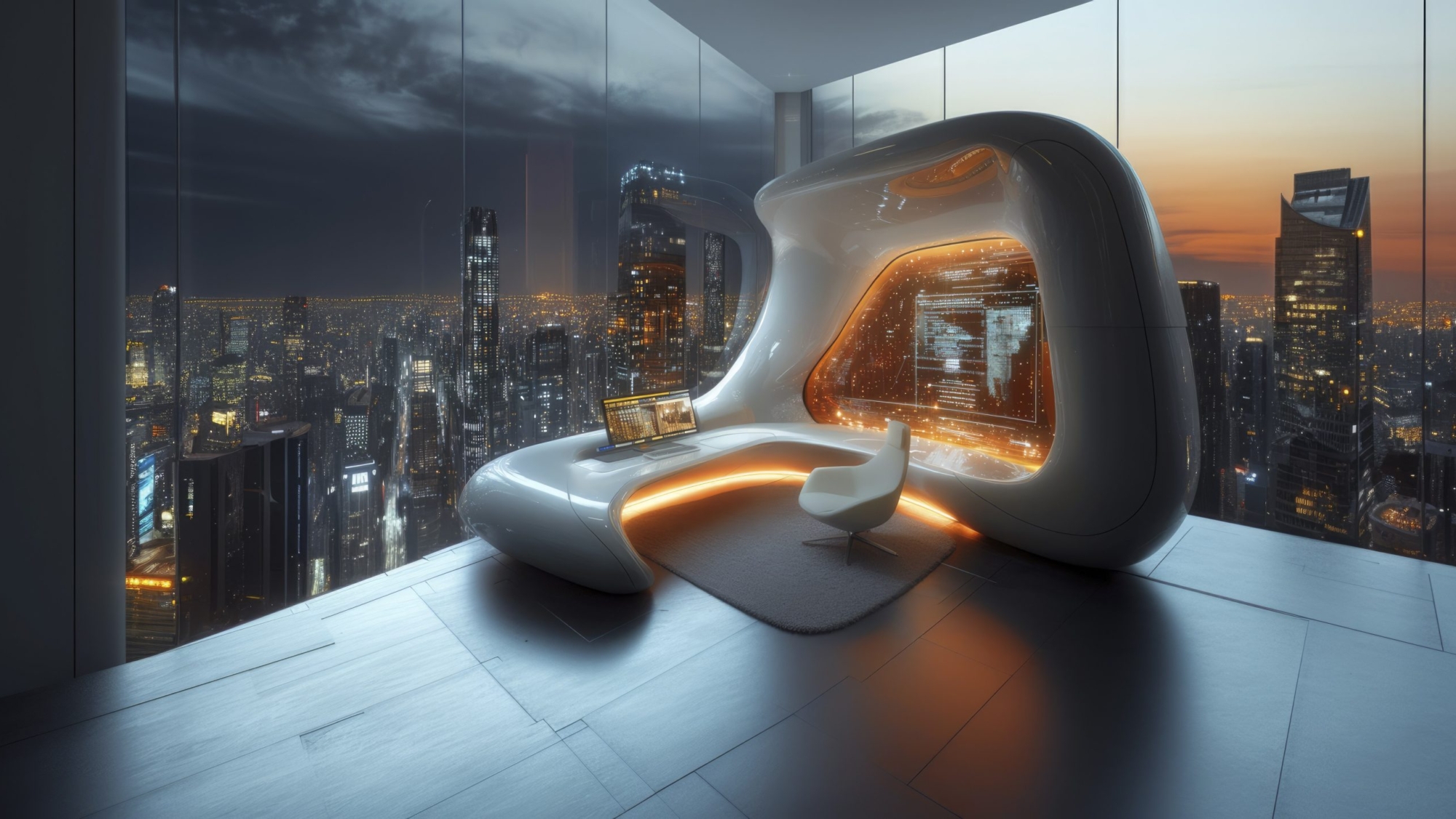
A truly intelligent home is not defined by the number of screens on its walls or the complexity of its connected appliances. Its defining characteristic is the invisible architecture that allows individual systems to function as a coherent whole. Lighting, climate control, environmental sensors, entertainment equipment, and household electronics become more useful when their interactions are designed around the way people actually live.
Where Technology Meets Spatial Design
Traditional residential design focuses on physical relationships: the distance between rooms, the placement of windows, the flow of natural light, and the accessibility of everyday essentials. Smart home architecture introduces another dimension. Digital relationships become just as important as physical ones.
A window sensor, for example, can communicate with a climate-control system. Lighting can respond to natural illumination rather than following a rigid schedule. A central controller can coordinate several devices through a single routine, reducing the need for repetitive manual adjustments.
These interactions are most effective when they respect the purpose of each space. A bedroom may prioritize quiet operation and gradual lighting changes, while a kitchen benefits from responsive task lighting and straightforward appliance controls. Technology should reinforce the character of a room instead of imposing the same automated behavior everywhere.
Designing Connections Before Buying Devices
The most common mistake in connected-home planning is selecting products individually without considering how they will interact. A collection of excellent devices can still create a frustrating experience when each depends on a separate application, incompatible communication standard, or different control method.
A stronger approach begins with the system itself. Designers and homeowners can identify the functions that should operate together, determine which components need a common controller, and establish reliable communication between them.
Interoperability is particularly important as systems expand. Standards such as Matter aim to improve communication among compatible products, although supported features and controller requirements still vary. Understanding these limitations before installation helps prevent unnecessary duplication.
The Importance of Restraint
More automation does not automatically produce a better living environment. A light that changes unexpectedly, an appliance that sends excessive notifications, or a climate system that overrides personal preferences can make technology feel intrusive.
Intelligent design therefore requires restraint. Automation should handle predictable, repetitive tasks while leaving meaningful decisions in human hands. Controls should remain accessible, settings should be understandable, and important functions should have practical alternatives when connectivity fails.
A Home That Adapts Without Becoming Complicated
The long-term strength of a smart home lies in its ability to accommodate new devices and changing routines without requiring a complete redesign. Modular equipment, documented configurations, dependable software support, and flexible control systems all contribute to this adaptability.
The best connected environments rarely demand constant attention. Their intelligence is expressed through smooth transitions, reliable responses, and fewer unnecessary interruptions. When the underlying architecture is carefully planned, technology becomes part of the home's natural rhythm rather than a separate layer that residents must continually manage.