

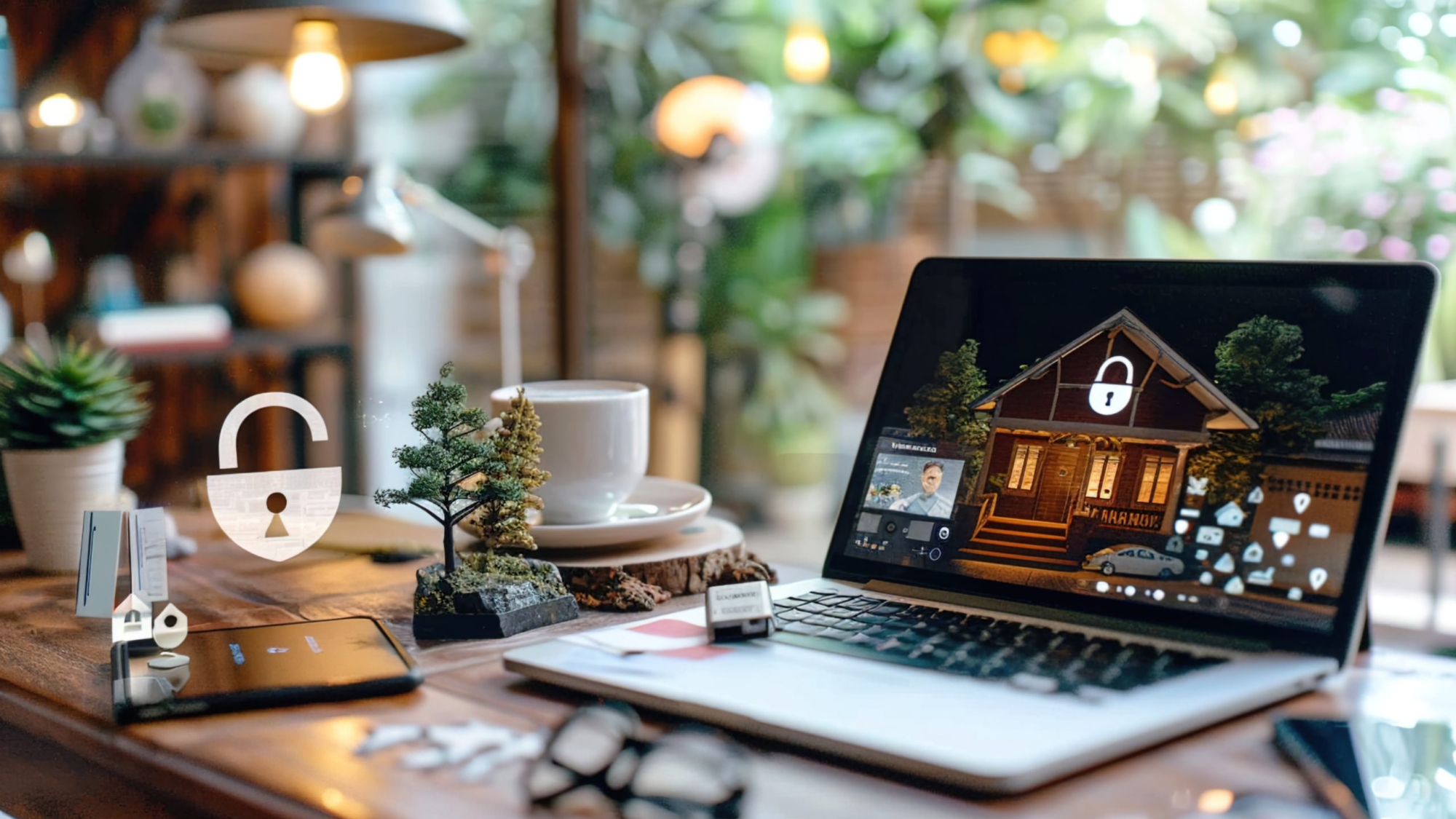
Smart home technology creates convenience by observing conditions, exchanging information, and responding to commands. Yet the same processes that make connected devices useful can reveal details about household routines, personal preferences, and daily activity.
Privacy-conscious design begins with understanding what a device collects, why it collects it, where that information goes, and how much control users retain over its use.
Different Devices Reveal Different Information
A temperature sensor may collect environmental readings without identifying individual occupants. A camera can capture visual details, while a voice assistant may process spoken commands. Door sensors and occupancy detectors can generate activity patterns even when they do not record images or conversations.
The sensitivity of the information depends on the device, its location, the frequency of collection, and how the data is combined with other records.
A seemingly harmless collection of events may reveal more than expected when analyzed over time. This makes data minimization an important principle: devices should collect only what is reasonably necessary for their intended functions.
Local Processing and External Services
Some smart home systems process commands and store information on local equipment. Others transmit data to external servers for voice recognition, remote access, analytics, or software features.
Local processing can reduce dependence on external services and may improve responsiveness, but it does not automatically guarantee privacy. The security of local devices, backups, account access, and network configuration still matters.
Cloud services may provide valuable functionality, so the decision is not simply a choice between safe and unsafe technologies. The important considerations include transparency, retention practices, access controls, and the ability to disable unnecessary data collection.
Permissions Should Reflect Real Needs
A connected appliance may request access to location information, contacts, microphones, or other phone functions. Some permissions may be necessary for a particular feature, while others may be optional.
Reviewing these permissions during installation can prevent unnecessary access. It is also useful to examine connected-service integrations, shared accounts, and household access settings periodically.
When a device is no longer used, removing its account connection and resetting it according to the manufacturer's instructions can reduce lingering access.
Designing Private Spaces
Device placement is a practical privacy decision. Cameras should not be positioned where they capture private activities unnecessarily, and microphones should be placed with awareness of who may be recorded.
Physical shutters, microphone mute controls, recording indicators, and clearly defined access permissions can make device behavior easier to understand.
Household members and visitors should also be able to recognize when monitoring equipment is present and understand its purpose.
A More Transparent Connected Home
Privacy settings are most effective when they are understandable and easy to change. Long policy documents alone are not enough if the actual controls are hidden or confusing.
Before purchasing a connected device, users can review its update policy, data storage options, account requirements, and available deletion controls. Products that explain these functions clearly are easier to evaluate.
Digital privacy does not require abandoning connected technology. It requires making informed decisions about the boundaries between convenience and observation. A well-designed smart home should provide useful assistance without collecting more personal information than its functions genuinely require.